Why relying on templated answers for security questionnaires is setting your team up to fail
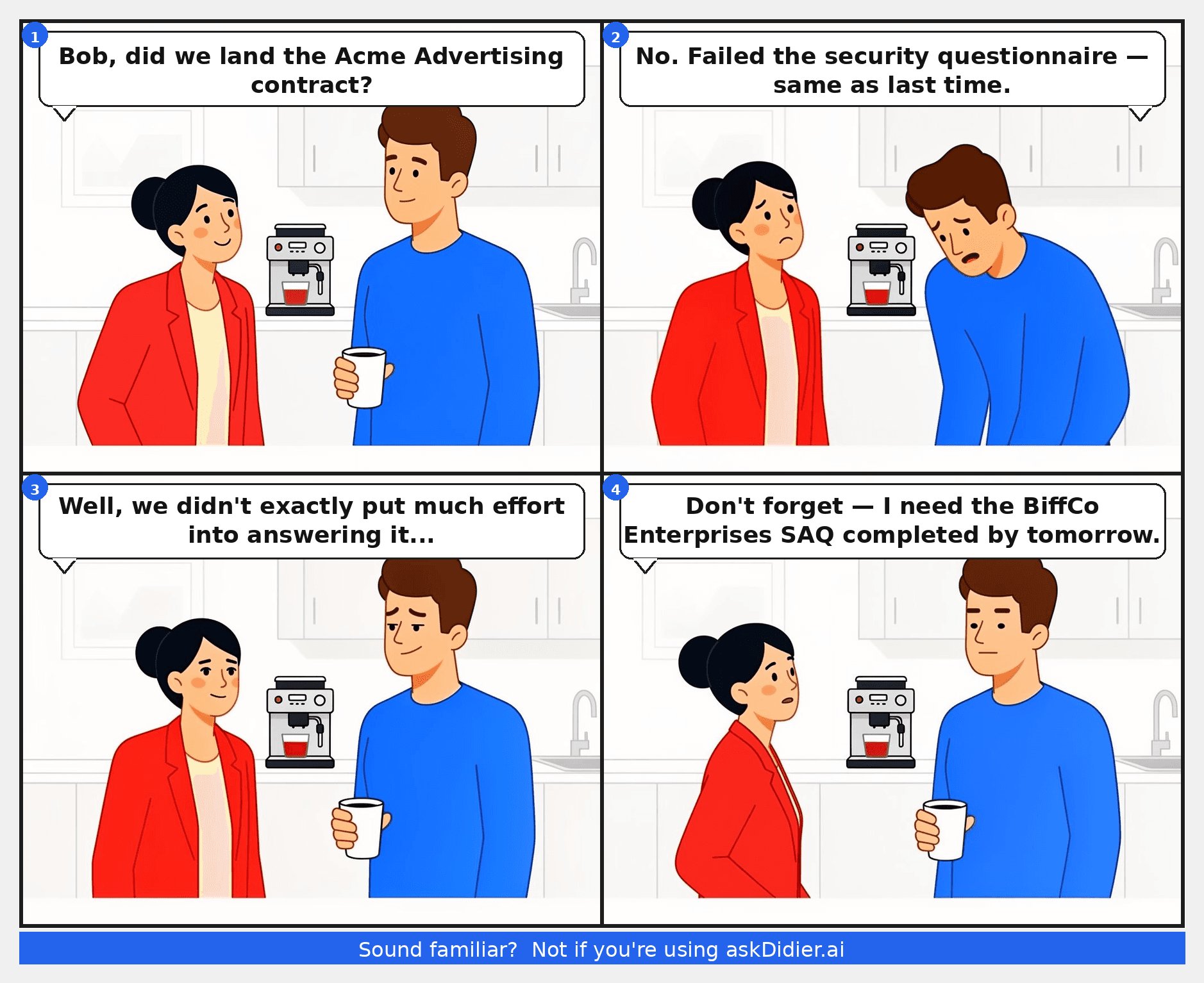
Security questionnaires land in your inbox constantly — from prospects, customers, procurement teams, and auditors. And when the volume is high and the deadline is tight, templated answers feel like the obvious solution. Copy, paste, submit. But this shortcut has a cost that often doesn’t show up until it’s too late.
At first glance, templated responses offer clear benefits: they reduce the amount of time spent drafting answers from scratch and create a uniform baseline for answers. Yet, this apparent efficiency masks serious pitfalls, such as missing the nuances of each unique security assessment or failing to keep answers aligned with your ever-evolving security controls. These risks often lead to undesirable consequences—compliance violations, audit failures, and damaged trust with stakeholders.
This blog will explore why relying on templated answers for security questionnaires jeopardises the accuracy and reliability of your responses. It will guide you through understanding the critical purpose of these questionnaires, highlight the risks of templates, and recommend best practices—including how automation can help you create precise, customised answers that truly reflect your security posture.
Understanding Security Questionnaires: Purpose and Importance
Security questionnaires play a vital role in compliance, risk management, and vendor evaluation. They serve as a formal method for assessing an organisation’s security controls, policies, and procedures, ensuring adherence to regulatory standards and contractual obligations.
Procurement teams, risk managers, and security officers use these questionnaires to evaluate potential third parties, partners, or suppliers. The answers provided form a basis for understanding risk exposure and determining if additional due diligence or remediation is necessary.
Because decisions hinge on the accuracy of these responses, personalised and well-considered answers are essential. One-size-fits-all replies fail to capture the specificities of your security environment, leading to misinterpretation and flawed risk assessments. Accurate answers foster transparency and build confidence with customers and regulators alike.
Risks and Consequences of Relying on Templated Answers
Using templated answers increases the risk of submitting inaccurate or outdated information. As your security infrastructure, policies, and compliance requirements change, static templates quickly become obsolete. This disconnect can lead to unintended compliance violations or audit failures when your documented security posture does not reflect reality.
Moreover, templated answers may omit critical context or nuances necessary to satisfy complex questionnaires, resulting in gaps that auditors or customers may flag. The reputational damage from perceived negligence or dishonesty can be significant, eroding trust with key stakeholders.
Common Reasons Teams Default to Templated Answers
There are understandable reasons why teams gravitate towards templated answers:
- Pressure to respond quickly: With numerous questionnaires arriving regularly, speed often takes priority.
- Lack of centralised knowledge: Without a single source of truth or collaboration tools, teams resort to canned responses.
- Underestimating complexity: Many underestimate the detailed nuances in security questions, assuming one response fits all.
- Overconfidence in controls: Assuming existing security controls universally apply across all contexts leads to complacency.
- Not understanding the importance of a question: Within the questionnaire will be a few questions that are particularly significant to the assessor, yet may appear routine to the responder, leading to overly generic answers.
Best Practices for Creating Accurate, Customized Security Responses
To improve response quality, develop a living repository of validated security answers that can be regularly updated to reflect your current security posture. This repository should be collaboratively maintained by security, compliance, and relevant stakeholders.
Strong cross-functional collaboration ensures answers are consistent and comprehensive. Regular reviews and updates guarantee accuracy and relevancy. Moreover, leveraging automation tools can streamline response processes while allowing necessary customisation to address each questionnaire’s specific context.
By balancing automation with human expertise, you can efficiently maintain precision and adapt to evolving requirements without succumbing to the traps of templated responses.
How Automation Enhances Security Questionnaire Management Without Templates
It’s worth addressing an obvious question: if askDidier.ai draws on previous answers, isn’t that just a smarter template? The difference is fundamental. A template is a static answer copied regardless of context. askDidier.ai uses your previous validated answers as source material — evidence of your actual controls and policies — and applies AI to generate a response that’s contextually appropriate for the specific question being asked. Your institutional knowledge powers the answer; it doesn’t become the answer.
Automation platforms, such as askDidier.ai, offer sophisticated ways to manage security questionnaires beyond simple templated answers. askDidier.ai, for instance, intelligently extracts questions, leverages a searchable knowledge base of previous validated answers, and uses AI to generate contextually appropriate responses.
This facilitates faster workflows while maintaining accuracy. Automation tools help ensure consistency yet permit customisation where necessary. They also provide audit trails, track changes, and facilitate collaboration—features essential for compliance officers and security teams.
For example, teams using askDidier.ai have reported reducing questionnaire response time from weeks to hours, significantly improving accuracy and audit readiness without relying on generic templates.
Actionable Steps for Compliance Officers to Move Beyond Templated Answers
You can start by assessing your current questionnaire response process to identify weaknesses linked to templated answers. Implement a centralised knowledge management system that stores validated responses and relevant documentation.
Invest in automated questionnaire platforms that support AI-assisted answering while preserving human review and approval. Finally, ensure your security and compliance teams receive training on the importance of nuanced, custom responses to elevate overall accuracy and compliance.
Conclusion: Building a Resilient Security Questionnaire Strategy
Relying on templated answers jeopardises both compliance and security by introducing risks of inaccuracy and outdated information. In contrast, a customised, accurate security questionnaire strategy safeguards your organisation’s integrity and reputation.
By embracing best practices in answer development and leveraging automation tools that empower your team to create precise, context-aware responses, you can enhance trust with customers and regulators while reducing time and effort.
Investing in a resilient questionnaire process today helps build security and compliance resilience for tomorrow.
Try askDidier.ai for Free for 14 Days
If you’re looking to reduce the time your team spends on security questionnaires, askDidier.ai offers a free 14-day trial with no credit card required. See how AI-powered automation can transform weeks of questionnaire work into just hours.